
Epoxy Flooring: A General Topic Guide for Durable Commercial Floors
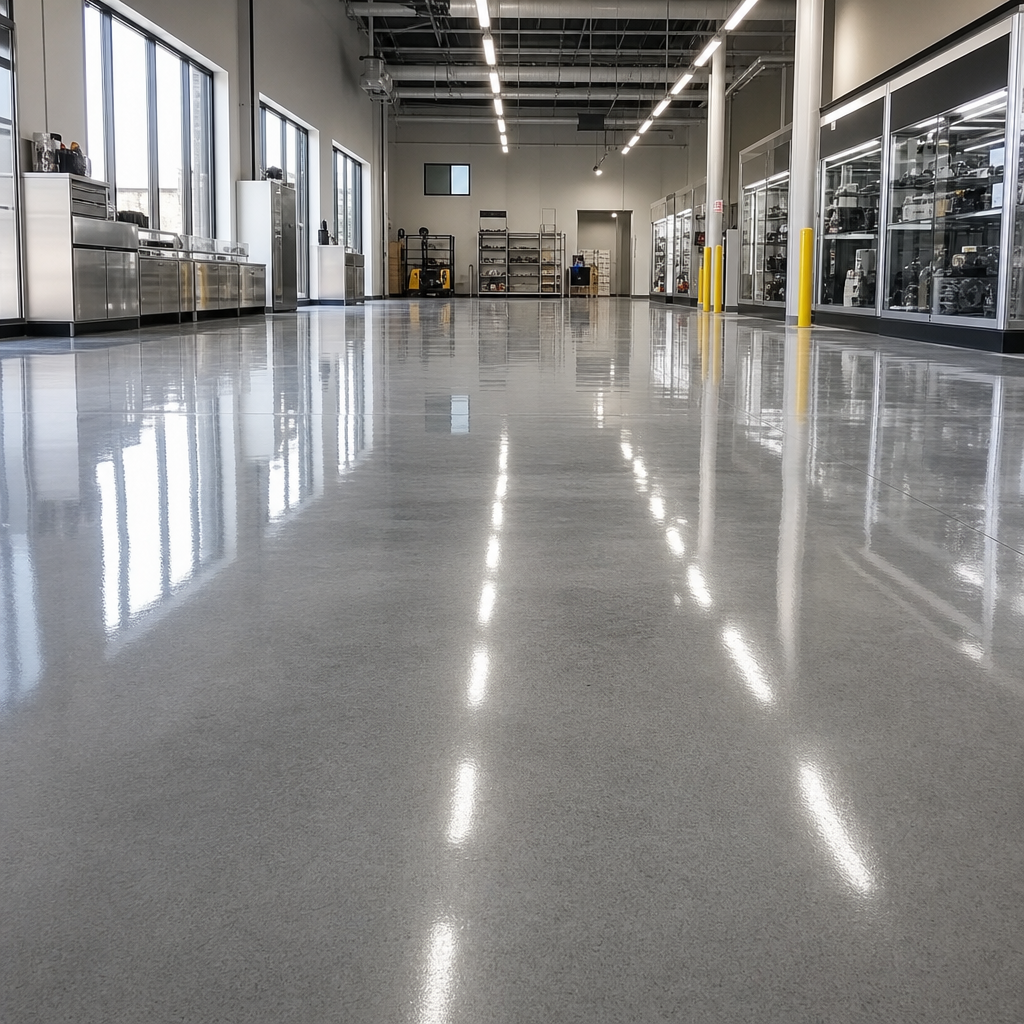
| Point | Details |
|---|---|
| Best Use | Epoxy flooring is well suited for commercial, industrial, retail, garage, warehouse, food service, and high-traffic concrete floors. |
| Performance | A properly installed epoxy system can improve abrasion resistance, chemical resistance, cleanability, and long-term floor protection. |
| Installation Quality | Surface preparation, moisture evaluation, primer selection, coating thickness, and cure control are critical to floor performance. |
| Design Options | Systems can include solid colors, metallic effects, quartz broadcast, decorative flake, safety texture, and high-gloss or satin finishes. |
| Maintenance Value | Epoxy floors are easier to clean than bare concrete when the coating system is selected and maintained for the environment. |
Table of Contents
What Is Epoxy Flooring?
Epoxy flooring is a resinous floor coating system applied over properly prepared concrete to create a durable, seamless, and cleanable surface. As a general topic, epoxy flooring covers a wide range of systems, from thin-build coatings to high-performance industrial floors with primer, body coats, decorative broadcasts, and protective topcoats.
Epoxy is formed when resin and hardener react through a controlled curing process. The result is a dense, bonded surface that can resist abrasion, many chemicals, tire traffic, foot traffic, and frequent cleaning better than untreated concrete. For background on the material chemistry, Wikipedia’s epoxy overview provides a useful introduction.
It is important to distinguish epoxy flooring from polished concrete. Polished concrete is mechanically refined concrete that gains clarity, reflectivity, and distinctness of image through grinding, honing, densifying, and polishing; epoxy is a topical resin system that builds a protective coating on top of the slab. If your project needs high DOI, natural concrete character, and low long-term maintenance, polished concrete flooring may be the better fit, while epoxy is often preferred when color uniformity, chemical protection, or decorative broadcast is the priority.
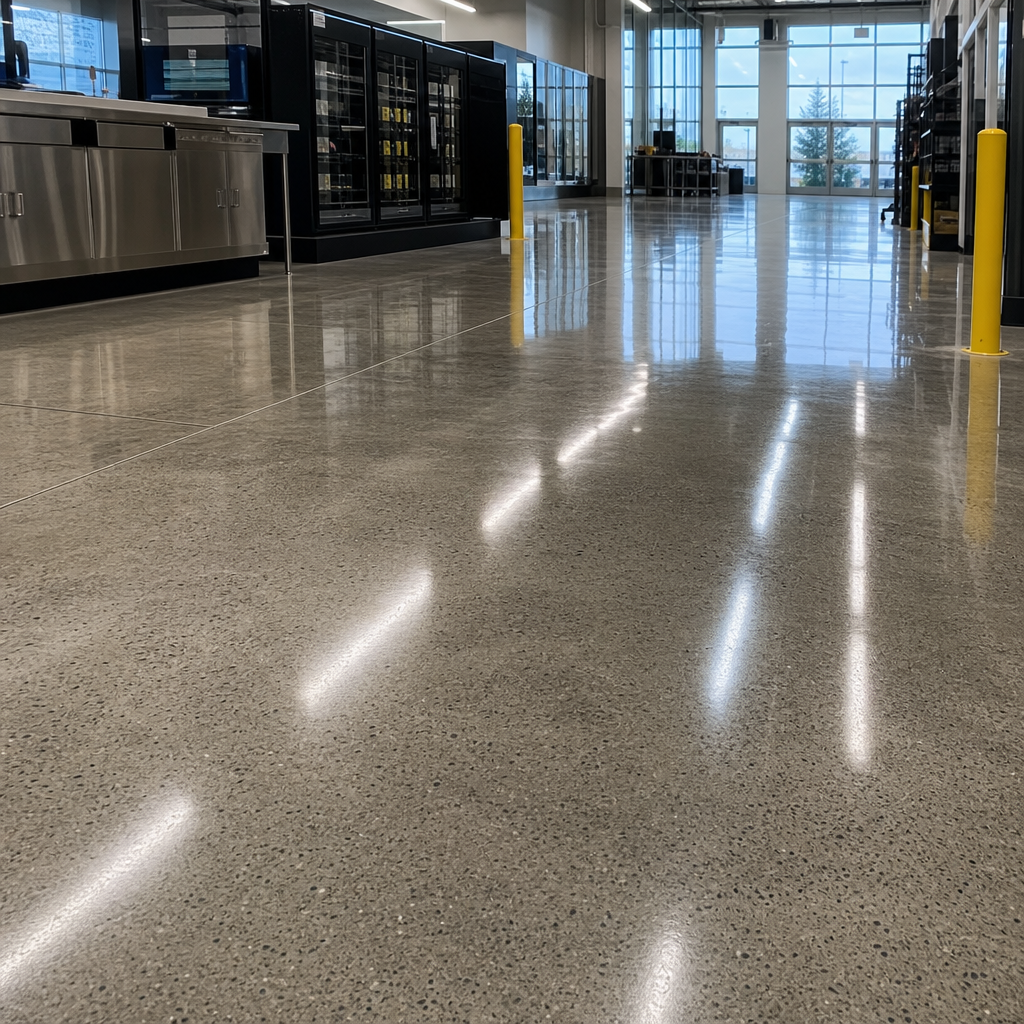
Expert Callout: The most important part of an epoxy floor is not the color coat. It is the bond between the coating and the concrete, which depends on surface preparation, slab condition, moisture control, and correct system selection.
Where Epoxy Flooring Works Best
Epoxy flooring performs well in spaces that need a strong, cleanable, visually controlled surface. Common applications include warehouses, automotive service areas, manufacturing facilities, grocery back-of-house areas, commercial kitchens, laboratories, restrooms, schools, retail floors, mechanical rooms, and residential garages.
In commercial and industrial facilities, the floor has to support more than appearance. It must handle carts, pallet jacks, forklifts, spills, wet cleaning, employee traffic, and daily operational abuse. Facility managers also need floors that support safety programs, including slip-resistance planning and housekeeping practices; the OSHA walking-working surfaces standards are a helpful reference for workplace floor safety responsibilities.
Epoxy is not the perfect answer for every slab or every business. Some environments require urethane cement, polyaspartic topcoats, polished concrete, sealed concrete, or hybrid systems. For example, a public retail floor may benefit from the natural reflectivity and DOI of commercial polished concrete, while a service bay or production room may require the chemical and abrasion resistance of a resinous coating system.
- Good epoxy flooring candidates: sound concrete, controlled moisture, moderate to heavy traffic, need for easy cleaning, and desired color consistency.
- Challenging candidates: wet slabs, active vapor transmission, contaminated concrete, soft or failing concrete, and areas exposed to extreme thermal shock.
- Design-driven candidates: showrooms, garages, offices, retail spaces, and hospitality areas where decorative flake, quartz, or metallic finishes add visual impact.
Epoxy Flooring Systems and Finishes
Epoxy flooring is not one single product. It is a category of systems that can be adjusted for thickness, slip resistance, color, gloss level, chemical exposure, traffic load, and cleaning method. A professional installer should match the system to the space instead of treating every project like a standard paint-and-chip floor.
Decorative flake systems are popular because they hide dirt, add texture, and create a finished appearance that works in garages, corridors, restrooms, locker rooms, and commercial spaces. Many modern flake floors use an epoxy base with a polyaspartic or polyurethane topcoat for faster return to service, improved UV stability, and stronger wear performance. For spaces where a flake system is the right fit, epoxy polyaspartic flake floors is a useful next step.
| System Type | Typical Use | Key Strength | Consideration |
|---|---|---|---|
| Solid Color Epoxy | Storage rooms, warehouses, utility areas | Clean, uniform appearance | Shows scratches and substrate imperfections more than flake or quartz |
| Flake Epoxy System | Garages, commercial restrooms, corridors, retail back rooms | Decorative, textured, forgiving appearance | Topcoat selection affects UV stability and wear resistance |
| Quartz Broadcast System | Commercial kitchens, locker rooms, wet areas | High texture and durability | Requires careful cleaning procedures due to surface profile |
| Metallic Epoxy | Showrooms, offices, hospitality spaces | High design impact and movement | More decorative than industrial; installer skill matters heavily |
| High-Build Industrial Epoxy | Manufacturing, service bays, production areas | Thicker protection for traffic and chemicals | Needs proper specification for exposure and cure time |
Pro Tip: Do not choose an epoxy floor based on color chips alone. Ask what primer, body coat, broadcast rate, topcoat chemistry, mil thickness, slip profile, and cure schedule will be used. Those details determine how the floor performs after the installer leaves.
Installation Process and Floor Prep
Professional epoxy flooring installation begins with evaluation. The installer should look at the concrete’s age, hardness, contamination, cracks, joints, moisture risk, existing coatings, and intended use. If a slab has oil, curing compounds, adhesive residue, laitance, or weak surface paste, the coating may fail unless those issues are corrected before installation.
Mechanical surface preparation is usually required. Diamond grinding or shot blasting opens the concrete surface and creates a profile that helps the epoxy bond. The International Concrete Repair Institute is widely known for concrete surface profile guidance, and many coating specifications reference ICRI CSP levels when defining preparation requirements.
Moisture is another major factor. Concrete can look dry while still moving vapor or alkalinity through the slab, which may cause bubbles, delamination, or whitening under a coating. OSHA’s crystalline silica resources are also relevant because concrete grinding can create respirable silica exposure if dust control and safety practices are not handled properly.
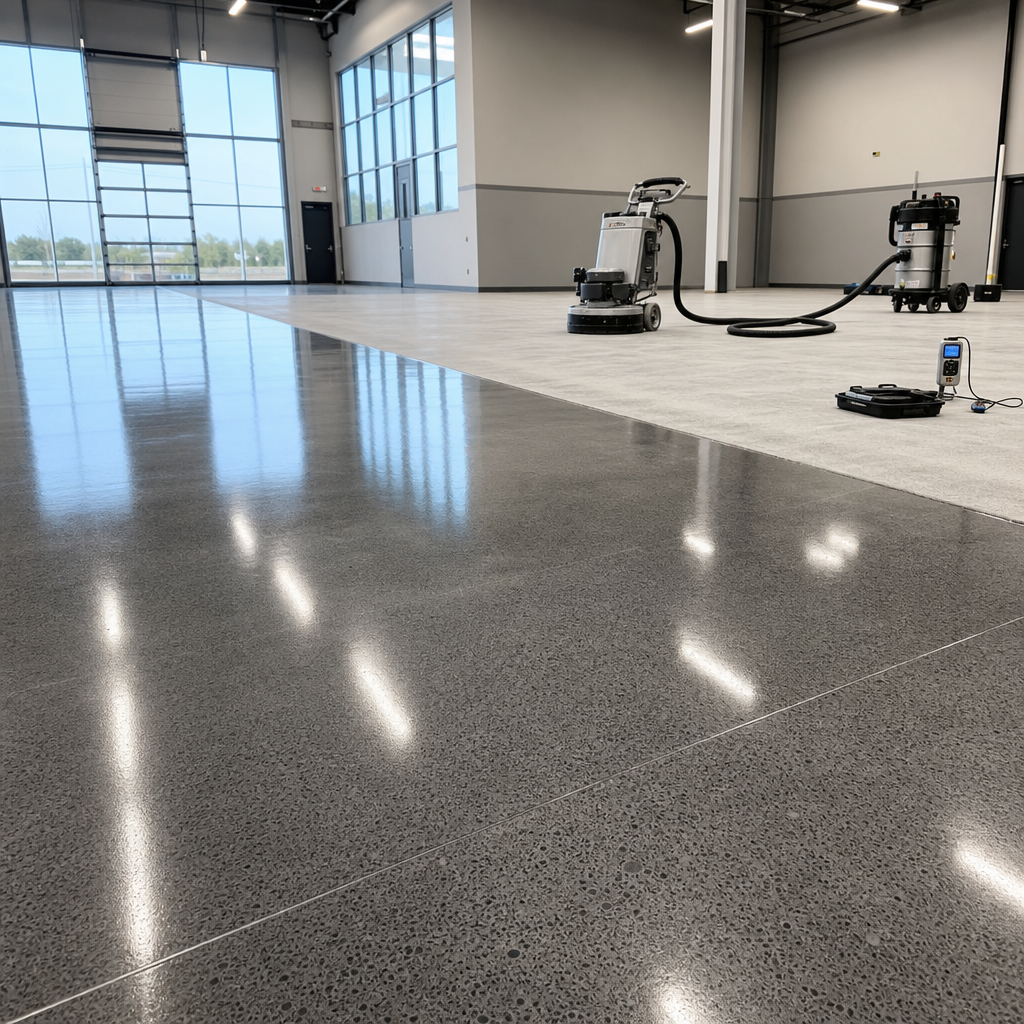
Typical Professional Installation Steps
- Site evaluation: Review traffic, chemical exposure, moisture risk, design goals, and operational downtime.
- Surface preparation: Grind or shot blast the concrete to remove weak material and create the right profile.
- Repairs: Treat cracks, spalls, joints, and surface defects as appropriate for the system.
- Primer application: Use the correct primer to improve bond and reduce outgassing risk.
- Build coat or broadcast: Apply epoxy body coat, then broadcast flake, quartz, or aggregate if specified.
- Scrape and vacuum: Remove loose broadcast material and prepare the surface for topcoat.
- Topcoat installation: Apply epoxy, polyurethane, or polyaspartic topcoat based on wear, UV, texture, and return-to-service needs.
- Cure and turnover: Protect the floor during cure and follow traffic timelines before reopening the space.
A rushed installation can look acceptable on day one and still fail prematurely. Professional craftsmanship shows up in edge work, joint treatment, consistent broadcast coverage, clean transitions, controlled texture, and an even finish without roller marks, debris, or thin spots. For concrete that needs a decorative but breathable finish instead of a heavy resin build, dyed and sealed concrete floors may also be worth comparing.
Maintenance, Cost, and Lifecycle Value
Epoxy flooring is often chosen because it makes concrete easier to maintain. The surface reduces dusting, improves cleanability, and can resist staining better than bare concrete when spills are handled promptly. In many facilities, that translates into a cleaner appearance, better light distribution from gloss finishes, and less time spent fighting concrete dust.
Maintenance still matters. Abrasive grit, metal shavings, harsh chemicals, dragging pallets, and aggressive scrub pads can wear or damage any coating. The best approach is a written maintenance plan that includes dust mopping, neutral cleaner, appropriate auto-scrubber pads, prompt spill removal, and periodic inspection of high-traffic zones.
| Maintenance Task | Recommended Practice | Why It Matters |
|---|---|---|
| Daily Dust Removal | Use dust mop, soft broom, or auto-scrubber as needed | Removes grit that can abrade the finish |
| Wet Cleaning | Use neutral cleaner and clean water rinse when appropriate | Prevents residue buildup and dull appearance |
| Spill Response | Clean chemicals, oils, and food spills quickly | Reduces staining, softening, or slip hazards |
| Traffic Protection | Use mats at entries and protect against sharp metal edges | Limits scratching and impact damage |
| Periodic Review | Inspect wear lanes, joints, and topcoat condition | Allows maintenance before full replacement is needed |
Cost depends on surface condition, square footage, coating type, thickness, repairs, moisture mitigation, decorative broadcast, topcoat chemistry, access, and required downtime. A low bid may exclude the preparation, repair, topcoat quality, or film build needed for real commercial performance. For indoor air considerations, the EPA’s guide to volatile organic compounds and indoor air quality is a helpful reference when discussing coatings, ventilation, and occupancy planning.
Slip resistance should also be specified intentionally. High-gloss floors can deliver strong visual impact and light reflectivity, but wet or oily conditions may require traction additives or a broadcast texture. The CDC/NIOSH page on slips, trips, and falls reinforces why floor condition, cleaning, footwear, and surface texture all work together in safety planning.
Frequently Asked Questions
How long does epoxy flooring last?
Epoxy flooring can last several years to well over a decade depending on surface preparation, system thickness, traffic, chemicals, cleaning practices, and topcoat selection. Heavy industrial floors may need periodic recoating in wear lanes, while light commercial or garage floors often last longer with proper maintenance.
Is epoxy flooring the same as polished concrete?
No. Epoxy flooring is a topical resin coating applied over concrete, while polished concrete is mechanically ground, honed, and polished to refine the concrete itself. Both can be durable, but they look different, perform differently, and require different installation methods.
Can epoxy flooring be installed over old concrete?
Yes, epoxy can often be installed over old concrete if the slab is structurally sound and properly prepared. Existing coatings, oil, moisture issues, cracks, and weak surface material must be addressed before coating to reduce the risk of failure.
Is epoxy flooring slippery?
Smooth epoxy can be slippery when wet, oily, or dusty. Slip resistance can be improved by adding decorative flake, quartz, aluminum oxide, polymer grit, or other traction additives into the system based on the environment.
How soon can a business reopen after epoxy flooring installation?
Return-to-service time depends on the coating chemistry, temperature, humidity, thickness, and topcoat used. Some polyaspartic topcoats allow faster reopening, while traditional epoxy systems may require longer cure times before foot traffic, equipment traffic, or chemical exposure.