
Walk into a newly built commercial space today and there’s a good chance the concrete floor is part of the design, not something hidden underneath another material.
Polished concrete has become one of the most requested flooring solutions for retail stores, industrial facilities, offices, automotive spaces, and large commercial interiors. The reason is simple: it combines durability, low maintenance, and modern appearance into one long-lasting surface.
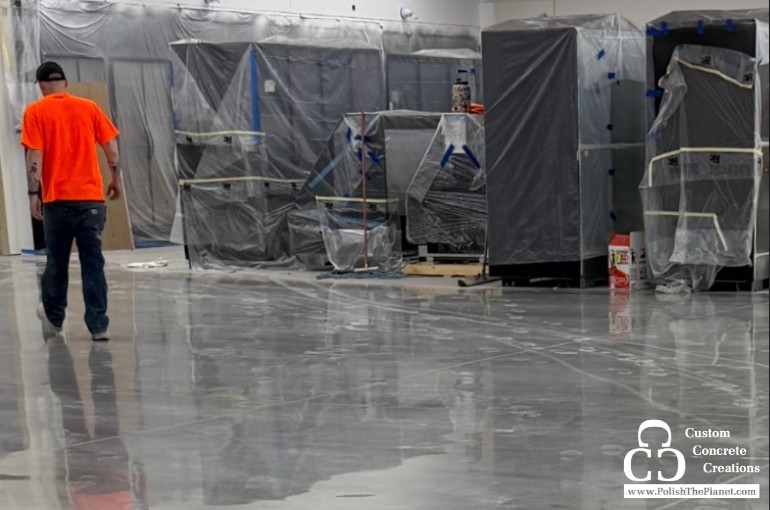
Projects like this show exactly why polished concrete continues to grow in popularity. Even during construction, the floor already reflects light throughout the space and creates a cleaner, brighter environment before the final build-out is complete.
Built for High-Traffic Environments
Commercial floors take a beating every day. Foot traffic, carts, equipment, machinery, and constant cleaning can quickly wear down traditional flooring systems.
Polished concrete is designed to handle that kind of daily use without peeling, delaminating, or constantly needing replacement. Through grinding, densification, and polishing, the concrete slab itself becomes the finished floor surface.
That process creates a hardened, dust-resistant floor capable of standing up to demanding environments while maintaining a clean, professional appearance.
For businesses, that means fewer long-term flooring headaches and lower maintenance costs over time.
Light Reflection Changes the Space
One of the biggest visual advantages of polished concrete is how it reflects natural and artificial light.
In large commercial interiors, reflective concrete can help brighten the entire space without relying solely on additional lighting. That clean reflection creates a more open and polished look that works well in modern retail spaces, warehouses, showrooms, and professional facilities.
In this project, the polished surface already transforms the atmosphere of the room even before construction is fully complete. The floor becomes part of the architecture itself.
Low Maintenance Without Sacrificing Appearance
Many flooring systems require waxing, coatings, or frequent replacement to maintain appearance. Polished concrete simplifies that process.
Routine cleaning typically involves dust mopping and occasional wet cleaning. Because the concrete itself is the finish, there’s no separate layer that easily peels or flakes away under heavy traffic.
That makes polished concrete a practical option for businesses that want both performance and appearance without constant upkeep.
Every Step Matters
A polished floor doesn’t happen overnight.
Surface preparation, grinding stages, crack repair, densification, and polishing all work together to create the final result. Every stage affects durability, clarity, and consistency across the slab.
Large commercial spaces especially require attention to detail to maintain a uniform finish from one end of the building to the other.
The finished product may look simple, but the process behind it takes experience, planning, and precision.
A Floor Designed to Last
Polished concrete continues to grow because it solves multiple problems at once. It creates a modern appearance, improves durability, reduces maintenance, and performs well in high-traffic environments.
For commercial property owners, it’s an investment that keeps working long after construction wraps up.