
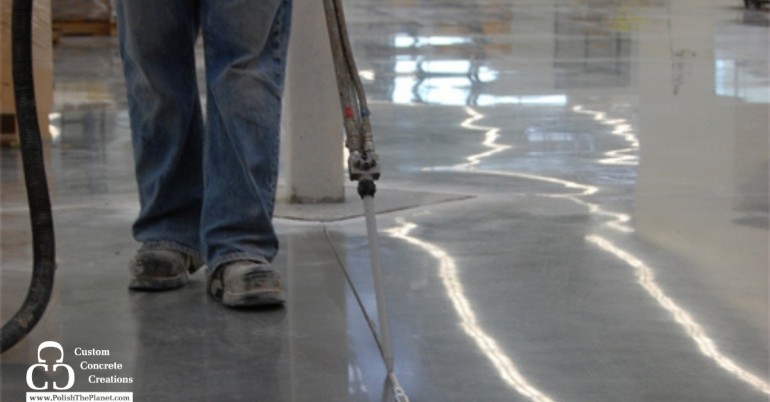
Why Joint Filler Matters More Than You Think in Polished Concrete Floors
It’s one of the last steps in the process—and one of the most important. Joint filler isn’t flashy, but it plays a critical role in how your polished concrete floor performs over time.
In commercial and industrial spaces, unfilled or poorly filled joints can lead to cracking, chipping, and serious long-term damage. But done right, joint filler helps preserve the structural integrity, appearance, and longevity of your finished concrete.
What Are Control Joints, and Why Do They Matter?
Control joints are intentional cuts made in the concrete slab to manage cracking. As concrete naturally expands and contracts, these joints help absorb movement and prevent random surface cracks. But if left unfilled—especially in high-traffic environments—they become weak points.
Heavy equipment, carts, forklifts, and foot traffic can break down the edges of unprotected joints. Over time, that damage spreads, affecting the polish and creating trip hazards.
The Role of Joint Filler
Joint filler protects the joint edges while still allowing the slab to move as needed. It acts as a shock absorber—flexible enough to expand and contract, strong enough to support heavy traffic.
Without proper joint filling, polished concrete loses both durability and aesthetics. That flawless finish starts to chip, spall, and crack from the inside out.
Choosing the Right Material
At Custom Concrete Creations, we use high-performance semi-rigid polyurea joint fillers designed for polished concrete systems. These materials:
Cure quickly for fast return to service
Bond tightly to joint walls
Flex without breaking
Can be shaved flush for a seamless finish
They’re color-matched or neutral, blending into the surrounding floor without disrupting the visual impact of the polish.
Timing Is Everything
Joint filler isn’t a one-size-fits-all step. The best time to install joint filler depends on:
Slab age
Moisture content
Traffic type
Whether the floor is new or a retrofit
Filling too early or skipping prep can lead to failure. That’s why our team evaluates every project and installs filler at the optimal point in the process—usually after polishing, before final sealing.
Long-Term Performance Starts at the Joints
A polished concrete floor is only as good as its weakest point. If the joints fail, the entire system is compromised. By investing in proper joint filler, you're not just finishing the floor—you’re protecting the investment.
Whether it's a warehouse, showroom, or grocery store, joint protection is non-negotiable if you want that high-performance shine to last.