
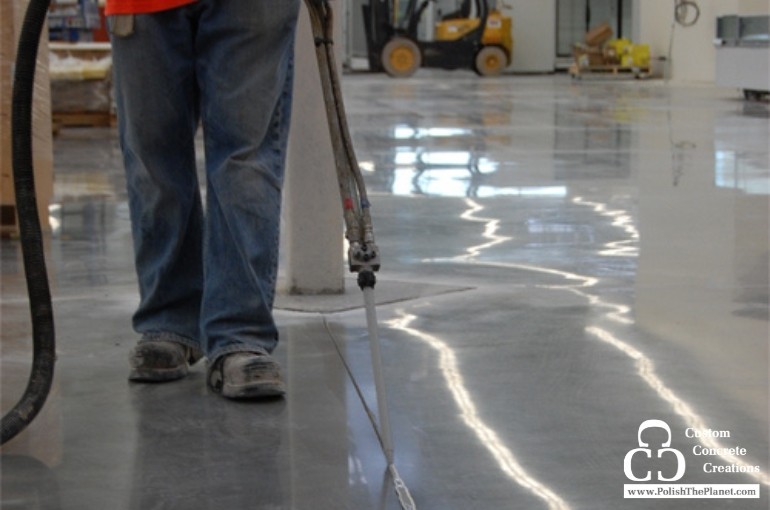
It’s one of the final steps in the polished concrete process, and one of the most important. Joint filler isn’t flashy, but it plays a critical role in how your floor performs over time. In commercial and industrial environments, unfilled or poorly filled joints can lead to cracking, chipping, and serious long-term damage. When done right, joint filler helps preserve the structural integrity, appearance, and longevity of your investment.
What Are Control Joints and Why Do They Matter?
Control joints are intentional cuts made in a concrete slab to help manage cracking. As concrete expands and contracts due to temperature and moisture changes, these joints absorb the movement and prevent random cracks from forming across the surface.
If left unfilled—especially in high-traffic areas—these joints become weak points. Foot traffic, forklifts, carts, and equipment can chip away at the unprotected edges. Over time, that damage spreads, affecting the finish, creating trip hazards, and compromising the overall floor system.
The Role of Joint Filler
Joint filler is designed to protect those joint edges while still allowing the slab to move as needed. It acts as a shock absorber, flexible enough to expand and contract, yet strong enough to withstand heavy traffic.
Without proper joint filler, polished concrete loses both durability and visual appeal. What begins as a sleek, seamless surface can quickly degrade—chipping, spalling, or cracking from the inside out.
Choosing the Right Material
At Custom Concrete Creations, we use high-performance semi-rigid polyurea joint fillers specifically engineered for polished concrete systems. These fillers are:
- Fast curing for minimal downtime
- Strongly bonded to joint walls
- Flexible enough to absorb movement
- Shaveable for a flush, seamless finish
They also come in neutral or color-matched options to blend with the surrounding slab, keeping the focus on the polish and design.
Timing Is Everything
Installing joint filler at the wrong time—or skipping prep—can lead to early failure. The best time to apply filler depends on several factors, including:
- Slab age
- Moisture content
- Traffic type
- Whether it’s a new install or a retrofit
Our team evaluates every project and applies filler at the right stage—usually after polishing but before sealing—to ensure long-term performance.
Long-Term Performance Starts at the Joints
A polished concrete floor is only as strong as its weakest points. If the joints fail, the entire floor system suffers. By investing in proper joint filler, you're doing more than finishing a floor—you’re protecting it.
Whether you’re running a warehouse, operating a grocery store, or showcasing products in a retail space, joint protection is non-negotiable. If you want that polished shine to last, it starts with the right filler.