
Epoxy Flake Flooring Omaha: A Practical Guide to Durable Garage and Commercial Floors
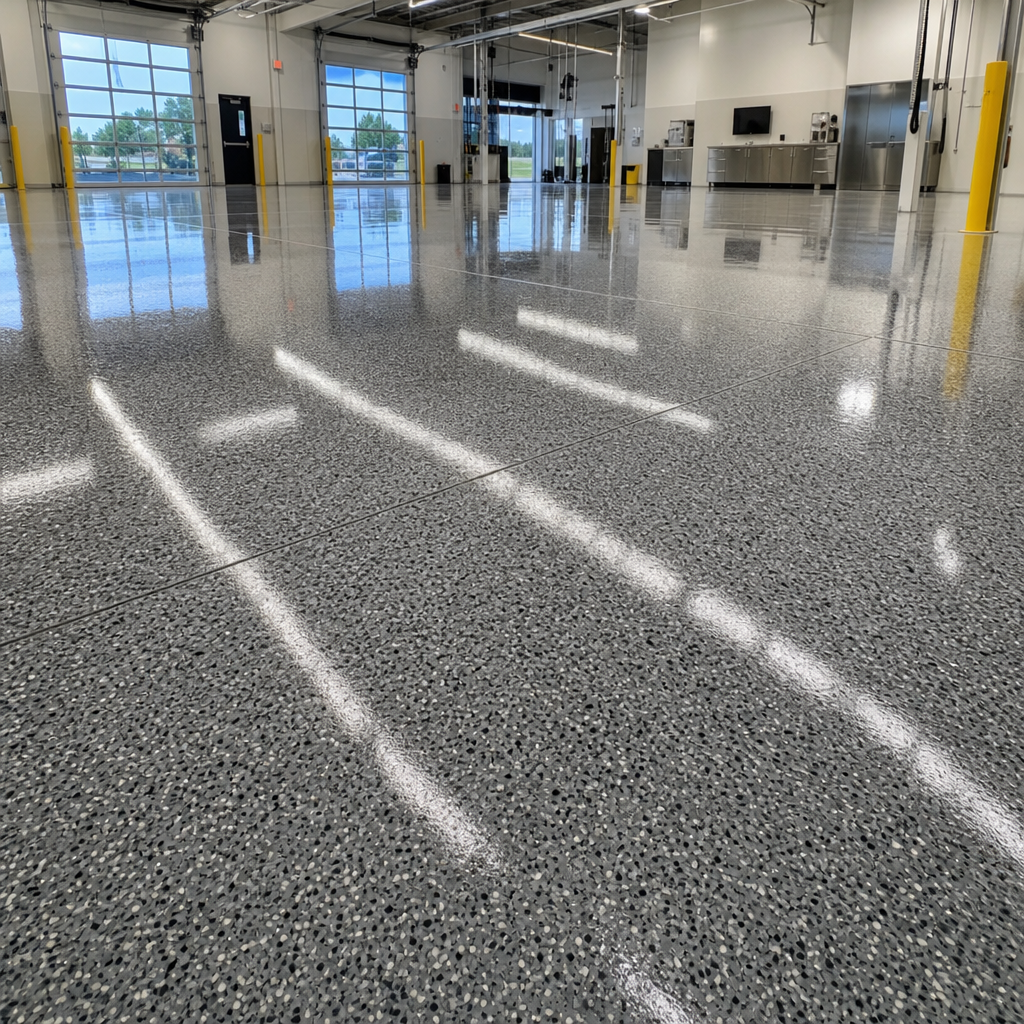
If you are comparing epoxy flake flooring Omaha options for a garage, shop, retail space, service area, or commercial facility, the real difference is not just the color blend. Long-term performance depends on concrete preparation, coating chemistry, flake broadcast quality, topcoat selection, and the installer’s control of the finished surface. A well-installed flake system can turn worn concrete into a cleaner, brighter, more impact-resistant floor with strong design impact and practical maintenance value.
In West Omaha and across the metro, homeowners and facility managers often ask for a floor that looks finished, hides daily wear, resists tire marks and spills, and holds up under real use. That is where professional epoxy and polyaspartic flake systems perform well when the substrate is evaluated correctly and the system is built for the environment.
| Point | Details |
|---|---|
| Best Use Cases | Garages, workshops, retail back-of-house areas, utility rooms, service spaces, light commercial floors, and select industrial environments. |
| System Components | Mechanical concrete prep, primer or base coat, vinyl flake broadcast, and a durable clear epoxy, urethane, or polyaspartic topcoat. |
| Key Performance Factors | Surface profile, moisture conditions, coating thickness, topcoat chemistry, slip resistance, and professional installation quality. |
| Design Benefits | Decorative flake blends add depth, hide minor dust and debris, improve visual uniformity, and create a clean finished appearance. |
| Omaha Considerations | Freeze-thaw exposure, road salt, hot tires, seasonal moisture, and garage slab condition all influence system selection. |
Table of Contents
What Epoxy Flake Flooring Is and Why Omaha Properties Use It
Epoxy flake flooring is a resinous floor coating system that combines a pigmented base coat with decorative vinyl flakes and a clear protective topcoat. The flakes are broadcast into the wet coating to create color variation, texture, and visual depth. Unlike bare concrete, the finished surface is sealed, easier to clean, and more resistant to common garage and commercial contaminants.
For epoxy garage floor coatings Omaha property owners typically want a system that can handle vehicles, lawn equipment, storage, foot traffic, snowmelt, and road salt. In commercial settings, decorative epoxy flooring Omaha NE projects may focus on cleanliness, brand presentation, abrasion resistance, and a more polished customer-facing appearance without the cost or maintenance profile of some tile systems.
It is important to use accurate terminology. Epoxy flake is not polished concrete. Polished concrete is a mechanically refined concrete surface with progressive grinding and densification, while epoxy and polyaspartic flake systems are topical coating systems. If you are comparing coating systems with polished or dyed concrete, review Polished Concrete and Budget Friendly Flooring Options Why Add Polished Concrete To Your List before selecting a finish.
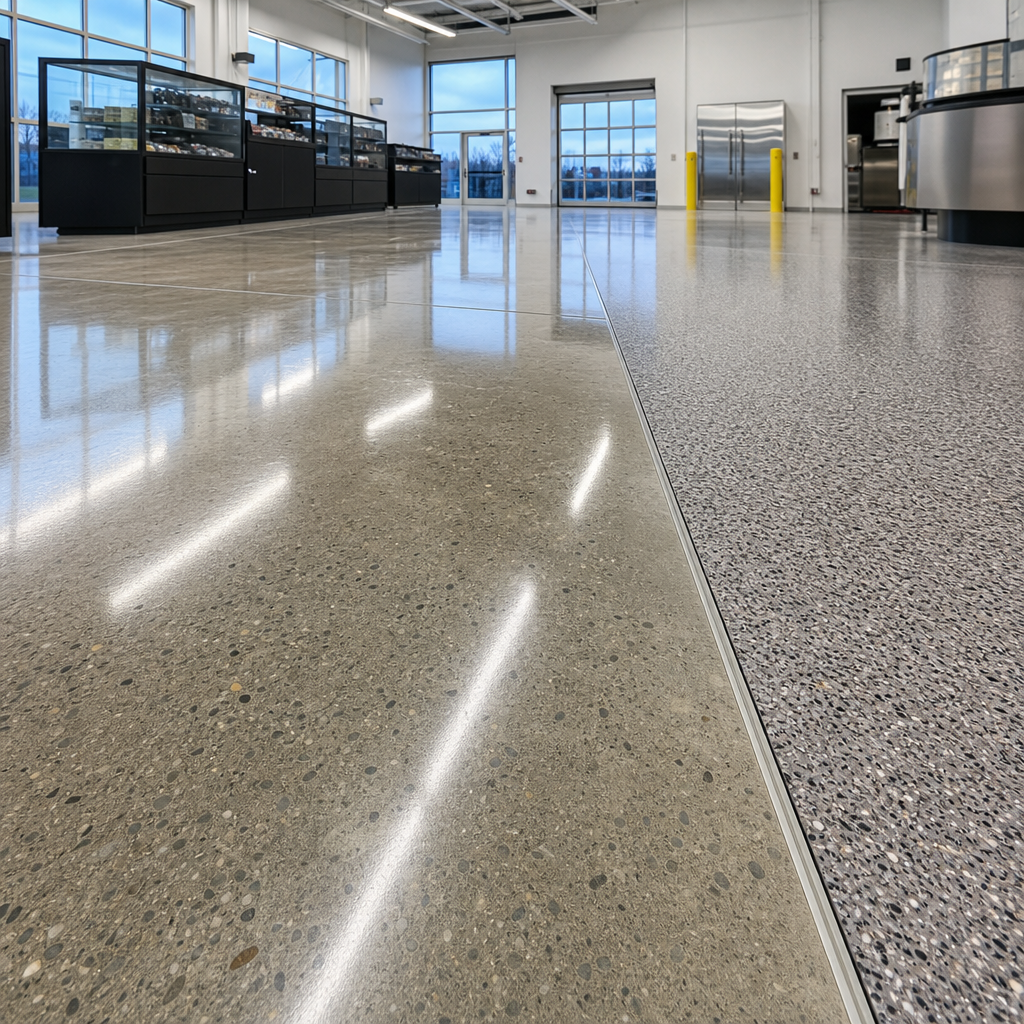
Expert note: A flake floor succeeds or fails at the concrete surface. The coating chemistry matters, but surface preparation, moisture evaluation, and topcoat selection are what determine whether the floor performs for years instead of simply looking good on day one.
Resinous flooring systems use polymer chemistry to create a durable film over the concrete surface. For general background on epoxy resins, Wikipedia’s epoxy overview explains the basic chemistry behind epoxy materials. For indoor coating decisions, owners should also understand ventilation and VOC considerations; the U.S. Environmental Protection Agency provides a useful overview of volatile organic compounds and indoor air quality.
Epoxy vs. Polyaspartic Flake Flooring in Omaha
Many customers use the phrase “epoxy flake floor” to describe any decorative flake coating, but not every system is built the same way. Some floors use an epoxy base coat with a urethane or polyaspartic topcoat. Others use polyaspartic materials for both the base and finish coats. The right choice depends on the slab, the desired working time, return-to-service schedule, chemical exposure, UV exposure, and final appearance requirements.
Polyaspartic flake flooring Omaha projects are popular when owners want faster curing and a durable clear topcoat. Polyaspartics are known for rapid return to service and strong abrasion resistance, but they require skilled installation because the working window can be shorter. Epoxy systems often allow more open time and can be excellent for build thickness, adhesion, and full flake broadcast when installed over properly prepared concrete.
| System Type | Strengths | Best Fit | Installer Considerations |
|---|---|---|---|
| Epoxy Base with Flake | Strong adhesion, good build, excellent flake acceptance, controlled working time. | Garages, shops, storage rooms, utility spaces, and many commercial floors. | Requires proper cure time, moisture review, and compatible topcoat selection. |
| Polyaspartic Topcoat | Fast cure, abrasion resistance, UV stability, glossy or satin finish options. | Garages needing quicker return to service and commercial areas with traffic demands. | Fast installation window requires experienced applicators and climate control awareness. |
| Full Polyaspartic Flake System | Rapid installation, durable finish, strong visual clarity when installed correctly. | Time-sensitive projects, select garages, and service spaces. | Surface prep and application timing are critical to avoid defects. |
| Urethane Finish Coat | Good abrasion and chemical resistance with finish sheen options. | Commercial floors, retail support spaces, and areas needing a balanced topcoat. | Must be matched to the base coat and expected traffic conditions. |
The term polyaspartic refers to a family of aliphatic polyurea coating materials; for a general technical description, see Wikipedia’s polyaspartic coating overview. In practical flooring terms, the installer’s system design is more important than the buzzword. A professional installer should explain why a specific base coat, flake size, broadcast rate, and topcoat are appropriate for the concrete and the environment.
Pro Tip: Do not choose a flake floor only by cure speed. In Omaha garages, the slab’s condition, moisture profile, surface contamination, and exposure to salt and hot tires should drive the system recommendation.
How Professional Flake Floor Installation Works
Professional garage floor resurfacing Omaha projects start with evaluation. The installer should inspect the concrete for cracks, spalling, previous sealers, oil contamination, moisture concerns, soft surface paste, and uneven repairs. A coating system is only as reliable as the surface it bonds to, so preparation is not a shortcut step.
Most high-quality installations use mechanical grinding or shot blasting to create a surface profile that supports coating adhesion. Acid etching is not a substitute for proper mechanical preparation on many professional projects because it may fail to remove old coatings, contaminants, or weak surface material. OSHA also provides safety guidance related to respirable crystalline silica when concrete is cut, ground, or blasted; see OSHA’s crystalline silica resource for broader workplace safety context.
- Inspection: Identify cracks, joints, spalling, moisture, previous coatings, and contaminants.
- Surface preparation: Mechanically profile the concrete for strong mechanical bond.
- Repairs: Fill suitable cracks, divots, and surface defects with compatible repair materials.
- Base coat: Apply epoxy or polyaspartic base material at the specified thickness.
- Flake broadcast: Distribute decorative flakes evenly, often to rejection for full coverage.
- Scrape and vacuum: Remove loose flake and refine the texture before topcoating.
- Topcoat: Apply clear protective coating with the right sheen, thickness, and traction profile.
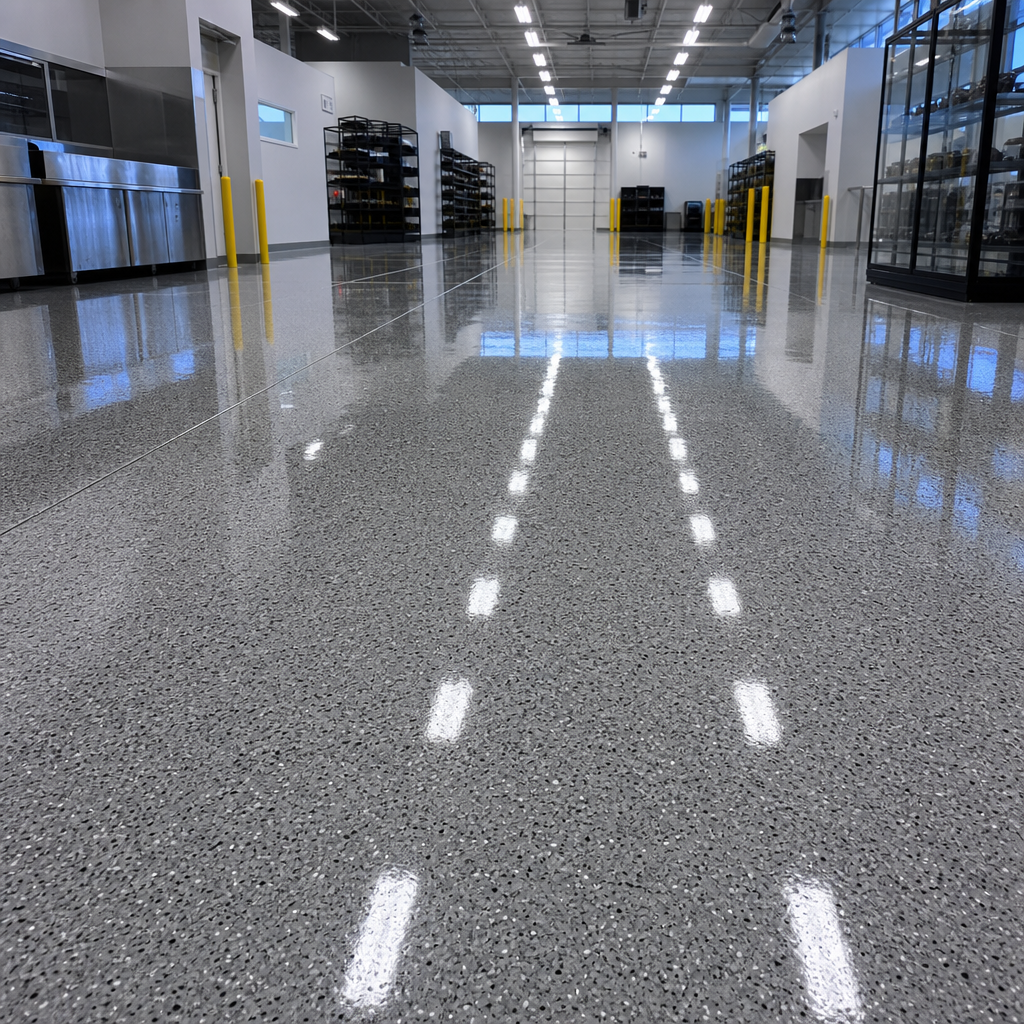
Crack treatment matters, but expectations should be realistic. Coatings can improve appearance and protect the surface, but they do not make structurally moving cracks disappear permanently. Control joints, construction joints, settlement movement, and freeze-thaw damage need to be handled with the correct repair strategy and honest communication.
For commercial and industrial floors, the specification may also include slip resistance, chemical exposure, sanitation requirements, reflectivity, and downtime planning. Owners comparing coatings with polished concrete, sealed concrete, or hybrid decorative systems can learn more through Why Polished Concrete Is Becoming The Go To Flooring Choice For Modern Commercial Spaces and garage floor resurfacing options. A polished floor may deliver higher clarity and distinctness of image in the concrete itself, while a flake system delivers a sealed decorative coating with strong hiding ability and color consistency.
Performance, Design, Reflectivity, and Maintenance Value
A good flake floor delivers both performance and appearance. The decorative flake blend helps mask small debris, dust, and minor surface wear better than a flat solid color coating. The clear topcoat creates depth and can be tuned for gloss, satin appearance, or added texture depending on the space.
Reflectivity and DOI, or distinctness of image, are often discussed in polished concrete, but coating systems have their own visual quality standards. A well-applied clear topcoat should look even, clean, and consistent, without excessive roller lines, cloudy areas, dry spots, or uneven flake distribution. In garages and retail support areas, that finish quality is what makes the floor feel professionally built instead of merely covered.
Maintenance is straightforward when the system is installed correctly. Sweep or dust mop loose grit, clean spills promptly, and use neutral cleaners instead of harsh solvents unless the coating manufacturer approves them. For facilities, written maintenance procedures help preserve appearance and reduce premature wear.
| Maintenance Task | Recommended Practice | Why It Matters |
|---|---|---|
| Routine sweeping | Remove grit, sand, and salt regularly. | Loose abrasives can dull the topcoat over time. |
| Wet cleaning | Use a neutral cleaner and clean water rinse when needed. | Protects gloss, clarity, and coating chemistry. |
| Winter care | Clean road salt and snowmelt residue from garage floors. | Reduces residue buildup and long-term surface stress. |
| Furniture and equipment | Use pads under heavy storage racks, jacks, and sharp metal edges. | Helps prevent gouges and point-load damage. |
| Commercial traffic | Use walk-off mats and scheduled cleaning in high-traffic entries. | Maintains appearance and extends topcoat life. |
Design options range from neutral granite-style blends to darker industrial looks and brighter decorative combinations. In West Omaha garages, popular choices often include gray, charcoal, tan, and hybrid blends that coordinate with cabinetry, walls, and vehicles. In commercial settings, decorative epoxy flooring Omaha NE projects can support brand color palettes while still delivering a practical, serviceable surface.
Concrete itself is a durable building material, but its surface performance depends on the finish system and exposure. The Portland Cement Association offers broad information about concrete as a material at cement.org. For coating projects, the goal is to combine the strength of the slab with a protective surface system that fits how the floor will actually be used.
Choosing Flake Epoxy Floor Installers in Omaha
The best flake epoxy floor installers Omaha property owners can hire are not simply coating applicators; they are concrete surface specialists. They understand how to read the slab, prepare the surface, control materials, and deliver a consistent finish. That experience matters whether the project is a two-car garage, a grocery backroom, a showroom, or a light industrial work area.
Ask how the floor will be prepared, what coating system will be used, what topcoat is recommended, and how the installer handles cracks, joints, and moisture concerns. A credible installer should be able to explain the difference between epoxy, urethane, and polyaspartic materials without overselling one product as a universal solution. They should also be direct about limitations, cure time, odor, ventilation, temperature constraints, and maintenance expectations.
- Do they mechanically grind or otherwise profile the concrete?
- Do they test or evaluate for moisture when conditions suggest risk?
- Do they use full broadcast flake or partial broadcast?
- What topcoat chemistry and sheen are specified?
- How will slip resistance be handled?
- What repairs are included, and what movement-related cracks are excluded?
- What maintenance instructions are provided after installation?
Custom Concrete Creations focuses on finish quality, practical system selection, and durable concrete flooring performance for residential, commercial, and industrial spaces in the Omaha area. If your project involves epoxy or polyaspartic floors, polished concrete, dyed and sealed concrete, or decorative concrete, a site-specific recommendation is the right place to start. You can also explore Epoxy and Difference Between Polished And Sealed Concrete Floors to compare finish options.
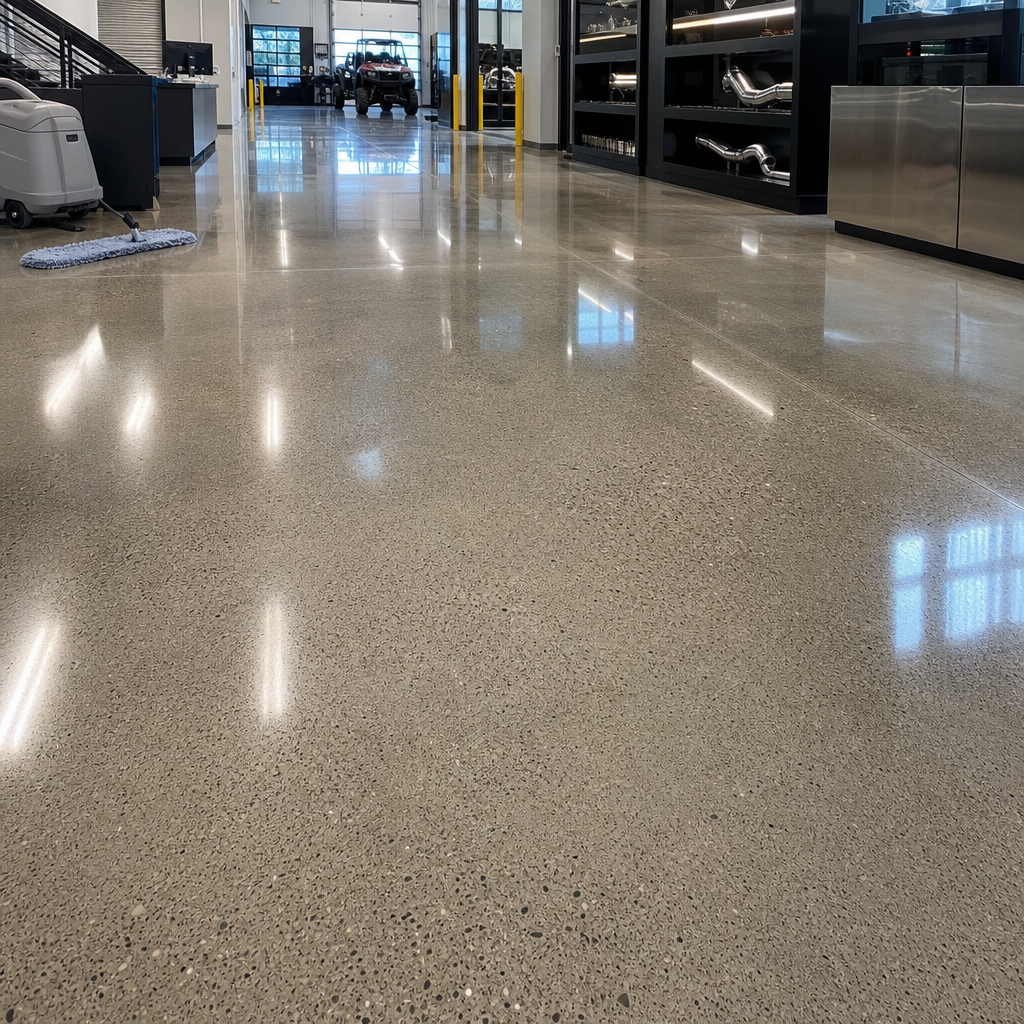
Transform your concrete with a professional finish by scheduling a consultation or requesting a custom flooring recommendation for your Omaha-area garage, commercial, or industrial project: contact Custom Concrete Creations flooring consultation
Frequently Asked Questions
How long does epoxy flake flooring last in an Omaha garage?
A professionally installed epoxy or polyaspartic flake floor can last many years in a residential garage when the concrete is prepared correctly and the floor is maintained properly. Lifespan depends on slab condition, coating thickness, topcoat quality, vehicle use, road salt exposure, and cleaning habits.
Is polyaspartic flake flooring better than epoxy for Omaha homes?
Polyaspartic flake flooring can be a strong option when fast cure time, UV stability, and abrasion resistance are priorities. Epoxy can also be an excellent base coat because it provides strong adhesion and build, so the best system is often a professionally designed combination rather than one material alone.
Can epoxy garage floor coatings handle Omaha winters?
Yes, quality epoxy garage floor coatings Omaha installers specify can handle normal winter exposure when the system is designed for road salt, snowmelt, hot tires, and freeze-thaw conditions. Regular cleaning is important because salt and grit can dull or stress the topcoat over time.
What is the difference between epoxy flake flooring and polished concrete?
Epoxy flake flooring is a topical resin coating with decorative vinyl flakes and a clear protective topcoat. Polished concrete is the actual concrete surface mechanically ground, refined, and densified to produce a polished finish, so the two systems look and perform differently.
How should I choose flake epoxy floor installers in Omaha?
Choose installers who evaluate the concrete, use mechanical surface preparation, explain the coating system, and provide clear maintenance expectations. The best flake epoxy floor installers Omaha property owners work with should be able to discuss moisture, cracks, topcoat chemistry, traction, cure time, and long-term performance.
Conclusion
Epoxy flake flooring is a practical, durable, and visually strong solution for Omaha garages, workshops, service areas, and commercial spaces. The key is choosing the right system for the slab and the use case, not simply picking a color blend or the fastest advertised installation.
For West Omaha homeowners and Omaha-area commercial property owners, professional installation makes the difference in adhesion, finish consistency, reflectivity, maintenance value, and long-term performance. With the right preparation, coating chemistry, and craftsmanship, a flake floor can turn worn concrete into a clean, durable surface built for everyday use.
Transform your concrete with a professional finish