
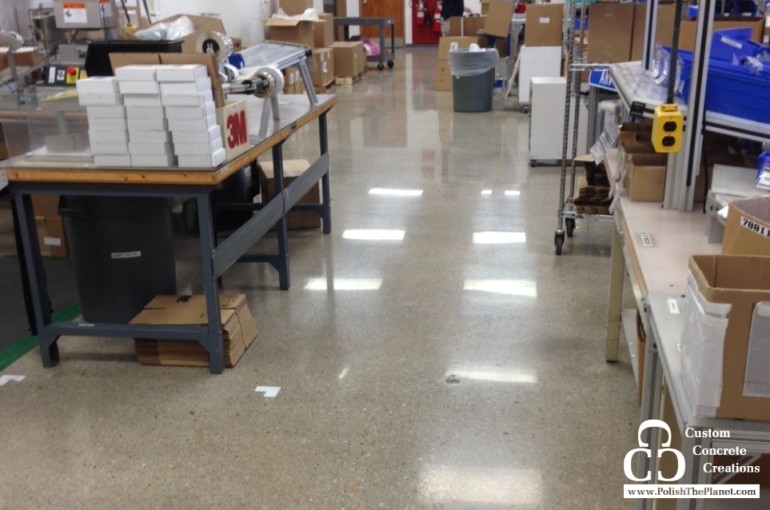
Manufacturing environments demand floors that can keep up with constant activity. Equipment moves across the surface all day, employees are on their feet for hours, and materials are transported from one workstation to the next. A floor in this kind of environment has to be durable, low maintenance, and capable of supporting productivity.
Polished concrete has become a popular solution for production facilities because it meets all of those requirements while also improving the overall workspace.
Built for Heavy Daily Use
Manufacturing floors take a beating. Forklifts, carts, pallet jacks, and heavy equipment all put pressure on the surface throughout the day. Traditional flooring materials can crack, peel, or wear down quickly under these conditions.
Polished concrete is different because it strengthens the concrete slab itself rather than covering it with another material. During the polishing process, the surface is mechanically refined and treated with densifiers that harden the concrete. This creates a durable surface that resists abrasion and holds up under heavy traffic.
The result is a floor that can support daily operations without constant repairs or replacements.
Easy to Maintain and Clean
Cleanliness is critical in many manufacturing and production environments. Dust, debris, and packaging materials can accumulate quickly if the floor surface is difficult to maintain.
Polished concrete simplifies cleaning because it creates a smooth, non-porous surface that resists dust buildup. Without coatings that chip or peel, there are fewer problem areas where dirt can collect. Regular sweeping and occasional wet cleaning are often enough to keep the floor looking and performing well.
This reduced maintenance requirement saves both time and labor for facility teams.
Improved Lighting and Visibility
One benefit of polished concrete that many facility managers appreciate is how it reflects light. The reflective surface helps distribute overhead lighting across the space, which can improve visibility in work areas.
Better lighting contributes to safer operations by making it easier for employees to see equipment, materials, and walkways. In large production spaces, this reflective quality can also reduce the need for additional lighting, helping lower energy costs.
Supports Efficient Workflow
In a manufacturing setting, workflow matters. Employees and equipment need clear, predictable paths to move materials and complete tasks efficiently.
A smooth polished concrete floor allows carts and pallet jacks to move easily across the space without resistance. Unlike rough or uneven surfaces, it reduces vibration and friction that can slow down operations or strain equipment.
Over time, these small improvements in movement and efficiency can add up to noticeable gains in productivity.
A Long-Term Flooring Solution
Manufacturing facilities operate on tight schedules and budgets. Frequent flooring repairs or replacements can interrupt operations and increase costs.
Polished concrete offers a long-term solution because it works with the existing slab rather than adding layers that may eventually fail. When properly maintained, polished concrete floors can last for many years while continuing to perform in demanding environments.
The Bottom Line
A manufacturing floor must do more than simply look good. It has to support daily operations, handle heavy equipment, and remain easy to maintain.
Polished concrete provides all of those benefits in one durable system. For facilities looking to improve efficiency while reducing maintenance, it is a flooring option built to keep production moving.