
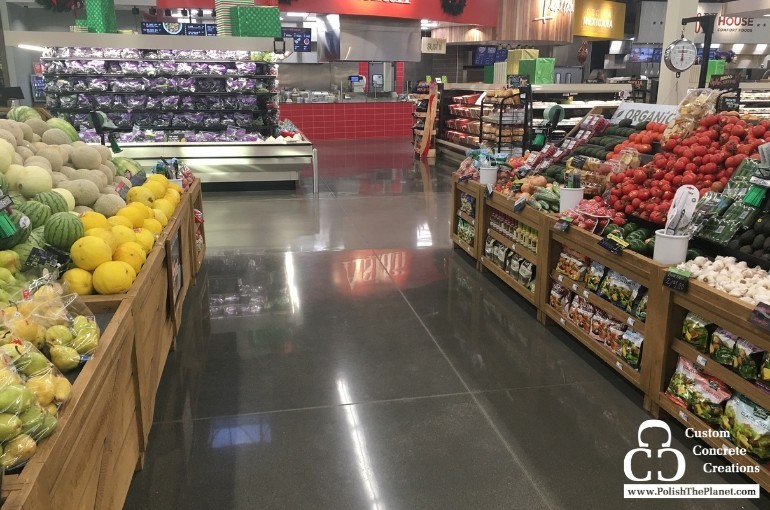
When businesses think about improving productivity, they often focus on staffing, equipment, or technology. One critical factor is frequently overlooked: the floor. In commercial environments, flooring directly affects how smoothly people, equipment, and materials move throughout a space. Floor flatness, traction, and durability all influence workflow efficiency, safety, and long-term operational costs.
Ignoring flooring performance can quietly slow operations, increase accidents, and create ongoing maintenance issues that disrupt daily work.
Floor Flatness Keeps Operations Moving
In commercial settings like warehouses, distribution centers, and manufacturing facilities, floor flatness is not just a technical detail. Uneven slabs cause carts to wobble, forklifts to vibrate, and equipment to wear prematurely. Operators move more slowly to compensate, which reduces efficiency across the entire workflow.
Flat, properly prepared concrete floors allow equipment to roll smoothly and predictably. This reduces strain on machinery, shortens travel times, and minimizes fatigue for operators who spend long hours on their feet. When movement is effortless, productivity naturally increases.
Poor flatness often leads to constant patching and repairs, creating downtime and workflow interruptions that could have been avoided with the right flooring solution from the start.
Traction Improves Safety and Confidence
Safety and efficiency go hand in hand. Slippery or inconsistent flooring forces employees to move cautiously, slowing down tasks and increasing the risk of accidents. In high-traffic commercial spaces, even small traction issues can lead to slips, trips, and lost work time.
Concrete floors can be finished to balance traction and performance. Polished concrete does not mean unsafe. With the right finish level, sealers, or additives, concrete provides a reliable grip while remaining easy to clean. Employees move with confidence, equipment operates more smoothly, and workflow remains steady.
A safer floor also reduces incident reports and insurance claims, which keeps operations running without disruption.
Durability Reduces Downtime
Floors that fail under pressure cause constant interruptions. Cracking, spalling, peeling coatings, and surface wear all lead to repairs that take space out of service. Every repair slows productivity and costs money.
Durable flooring solutions like polished concrete are designed to handle heavy loads, constant foot traffic, and equipment movement without degrading. Instead of replacing flooring every few years, businesses benefit from decades of performance with minimal maintenance.
When the floor does not require constant attention, teams can focus on their work rather than work around problems.
The Cumulative Effect on Workflow
Individually, flatness, traction, and durability might seem like small considerations. Together, they define how efficiently a commercial space functions. Smooth movement, fewer safety concerns, and reduced maintenance create a reliable environment that supports productivity.
Flooring is not just a surface. It is an operational tool that supports or hinders every task performed in a space.
The Bottom Line
Efficient workflows start from the ground up. When commercial floors are flat, safe, and durable, businesses experience fewer disruptions, improved safety, and stronger long-term performance. Investing in the right flooring solution is not just about appearance; it is about building a foundation that supports productivity every day.
Custom Concrete Creations Omaha specializes in commercial concrete flooring solutions designed to enhance workflow efficiency, safety, and durability. If your space needs a floor that works as hard as your team does, we are ready to help.