
Commercial Concrete Floor Coatings Omaha

Commercial concrete floor coatings Omaha businesses use are protective flooring systems designed to resist traffic, abrasion, spills, moisture, and frequent cleaning. The best system is selected according to the slab condition, operating environment, safety requirements, desired appearance, and available installation schedule.
Custom Concrete Creations installs commercial and industrial flooring systems for Omaha-area property owners, contractors, facility managers, retailers, grocery operators, and businesses. The right solution may be epoxy flooring, polyaspartic coatings, urethane cement, resinous flooring, dyed and sealed concrete, decorative concrete, or true polished concrete. Each system must be specified and installed according to the demands of the space rather than treated as a one-product-fits-all finish.
| Point | Details |
|---|---|
| System selection matters | Epoxy, polyaspartic, polished, and sealed concrete have different performance characteristics and should not be treated as interchangeable finishes. |
| Preparation controls performance | Mechanical surface preparation, repairs, moisture evaluation, and clean application conditions are critical to coating adhesion. |
| Commercial use drives the specification | Traffic, chemicals, cleaning procedures, slip resistance, shutdown time, and visual goals determine the appropriate system. |
| Finish quality affects the space | Consistent color, clean terminations, uniform texture, gloss, reflectivity, and DOI contribute to a professional result. |
| Maintenance should be planned early | A system selected around actual maintenance capabilities generally delivers better long-term value. |
Table of Contents

What Commercial Concrete Floor Coatings Omaha Facilities Need Them to Do
A concrete coating creates a protective wearing surface over a properly prepared slab. Depending on the selected chemistry, thickness, and aggregate, the system can improve resistance to abrasion, stains, oils, cleaning chemicals, and routine impact while making the floor easier to maintain. A well-designed system may also provide a seamless surface, defined traffic zones, enhanced light reflectivity, and a slip-resistant flooring texture suited to the facility.
Commercial floors must also support operations. Warehouse floor coatings in Omaha may prioritize abrasion resistance, forklift traffic, visibility, aisle definition, and cleaning efficiency. Retail or grocery floors may place greater emphasis on color consistency, reflectivity, distinctness of image, and customer-facing finish quality. Food production, brewery, and processing environments may require stronger thermal-shock resistance, chemical protection, sanitary detailing, or urethane cement systems.
Not every facility needs a topical coating. Polished concrete uses the slab itself as the finished wear surface and can reduce dependence on a film-forming coating. Businesses comparing these approaches can review Polished Concrete and Why Polished Concrete Is Becoming The Go To Flooring Choice For Modern Commercial Spaces. Facilities with damaged, contaminated, or previously covered slabs may also need professional flooring removal and surface preparation before a final system can be recommended.
Expert callout: A coating is only one part of a flooring system. The slab condition, preparation profile, repairs, primer, body coat, aggregate, topcoat, cure conditions, and maintenance plan all influence service life.
Choosing the Right Commercial Flooring System
There is no universal product for every slab or facility. Commercial epoxy flooring in Omaha is commonly selected when a high-build, seamless system is needed. Polyaspartic materials can provide rapid curing, strong color retention, and efficient return-to-service when conditions and system design are appropriate. Cementitious urethane and other resinous flooring systems may be considered for facilities exposed to hot water, aggressive chemicals, grease, food products, or substantial temperature changes.
Polished concrete is technically different from a topical coating. It is created through mechanical grinding, honing, densification, and polishing of the concrete itself. Dyed and sealed concrete is also distinct: color is introduced and protected with a sealer, creating warmth and visual texture without representing the floor as polished concrete. Concrete resurfacing or a polished overlay may be appropriate when the existing slab cannot provide the desired visual consistency or aggregate exposure.
| Flooring System | Typical Strengths | Common Commercial Uses | Important Considerations |
|---|---|---|---|
| Epoxy coating | High build, seamless coverage, chemical resistance, decorative options | Production areas, service spaces, back-of-house rooms, warehouses | Cure time, UV exposure, moisture conditions, and topcoat selection |
| Polyaspartic coating | Fast cure, abrasion-resistant topcoat options, color stability | Retail, commercial service areas, time-sensitive renovations | Working time, substrate temperature, installer control, and system compatibility |
| Epoxy/polyaspartic flake system | Decorative texture, coverage of minor visual variation, durable wear layer | Commercial corridors, restrooms, locker areas, service facilities | Broadcast consistency, edge detailing, texture, and topcoat thickness |
| Polished concrete | High reflectivity, measurable DOI, abrasion resistance, low topical-film dependence | Grocery, retail, showrooms, offices, large public spaces | Aggregate exposure, slab quality, joint treatment, and polishing sequence |
| Dyed and sealed concrete | Color, character, visual texture, and practical commercial durability | Retail, restaurants, offices, hospitality, decorative interiors | Sealer wear, maintenance expectations, color variation, and recoat planning |
System selection should begin with the facility’s actual exposure profile. Forklift turning areas, loading zones, coolers, kitchens, production lines, service bays, sales floors, and public corridors can impose very different demands even when they are located in the same building. The installer should identify impact points, chemical contact, thermal cycling, standing water, ultraviolet exposure, cleaning frequency, and expected pedestrian or vehicle traffic before establishing the coating build.
Pro Tip: Compare complete systems rather than individual product names. Film thickness, number of coats, surface profile, repair scope, texture, cure schedule, and topcoat chemistry are often more important than a broad label such as “epoxy floor.”
Why Installation Quality Determines Durability
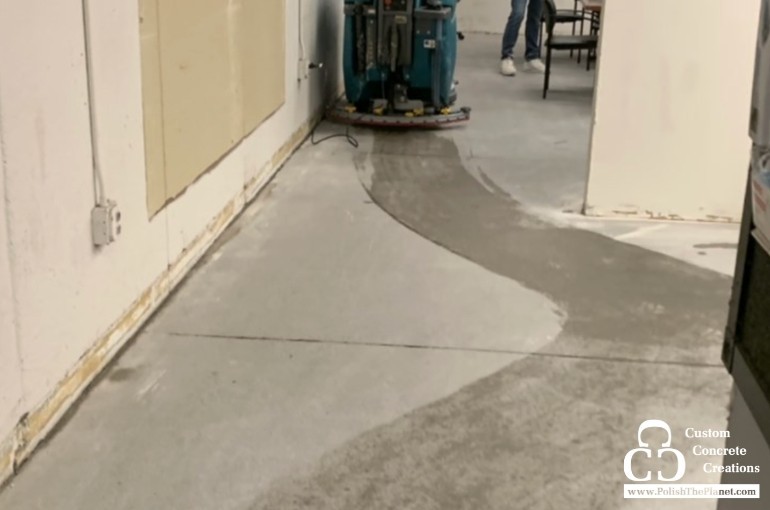
Industrial concrete floor coatings in Omaha depend on disciplined substrate preparation. The installer must evaluate contamination, laitance, cracks, joints, surface hardness, previous coatings, and moisture-related risk before applying material. Mechanical grinding or shot blasting creates the required concrete surface profile and removes weak material that could compromise adhesion. Simply acid etching or cleaning a slab is not automatically equivalent to controlled mechanical preparation.
Moisture evaluation should be matched to the proposed system and project conditions. Elevated moisture vapor transmission can contribute to blistering, debonding, discoloration, or adhesive failure when a system is not designed for the slab. In some cases, moisture vapor mitigation may need to be incorporated before the decorative or protective wear coats are installed. Standards and test methods published by ASTM International provide a technical framework, while the American Concrete Institute publishes broader guidance related to concrete design, construction, repair, and performance.
- Inspect the slab and document existing conditions.
- Remove incompatible coatings, contaminants, adhesives, and weak surface material.
- Test moisture conditions when the slab, flooring system, or project history indicates a risk.
- Repair cracks and surface defects according to their type and expected movement.
- Prepare edges, drains, doorways, columns, joints, and equipment transitions.
- Confirm the required concrete surface profile before applying the primer.
- Apply each layer within the specified environmental and recoat windows.
- Verify texture, coverage, cure, and finish consistency before turnover.
Cracks and joints require different treatment. Static cracks may often be cleaned, opened, and repaired as part of surface preparation, but moving joints should generally remain capable of accommodating movement. Appropriate joint sealants can help protect joint edges and support cleaning while preserving the joint’s intended function. No rigid resin system can guarantee that active slab movement will never become visible again.

Balancing Performance, Safety, and Design
A commercial floor is part of both the operating environment and the visual identity of a facility. Color can define work zones, walkways, service areas, restricted areas, or brand standards. Gloss and reflectivity can make a clean retail interior appear brighter and more finished. On polished concrete, high DOI—distinctness of image—indicates the clarity of reflected objects, not simply the amount of gloss.
Texture must be chosen around contaminants, footwear, cleaning practices, slope, and traffic. More texture may improve traction in wet or greasy conditions, but an excessively aggressive profile can be harder to mop and may retain soil. The goal is to balance slip resistance with cleanability rather than maximize texture without considering daily maintenance. The OSHA walking-working surfaces standard requires walking-working surfaces to be maintained in a clean, orderly, and sanitary condition, so flooring design and maintenance procedures should work together rather than relying on texture alone.
Finish samples and mockups can help decision-makers evaluate color, aggregate, texture, gloss, and cleaning characteristics under the facility’s actual lighting. They can also establish realistic expectations regarding slab variation, patch visibility, joints, and transitions. Decorative flakes, quartz aggregate, metallic effects, solid colors, stains, and natural polished-concrete finishes each communicate a different visual character.
For customer-facing spaces, bring color and character to the facility with dyed and sealed concrete that is built to last, or explore stained concrete floors. For highly reflective retail and grocery environments, Polished Concrete explains why clarity, refinement, and installation sequence matter as much as gloss readings. Additional examples in Retail Polished Concrete Floors Omaha can help facility teams compare practical and aesthetic priorities.
Maintenance and Long-Term Flooring Value
Commercial concrete floor sealing in Omaha can reduce surface absorption and simplify routine cleaning, but every sealer and coating remains a maintainable wear surface. Neutral cleaners, appropriate pads, prompt spill removal, entrance matting, and periodic inspections help prevent premature dulling or abrasion. Dirt and grit should be removed frequently because they can act like sandpaper under foot traffic, carts, pallet jacks, and vehicle tires.
Maintenance requirements should be established before installation. A high-gloss system may deliver strong design impact, but facilities must be prepared to clean it correctly and address localized wear. The EPA Safer Choice program is a useful resource when evaluating cleaning products with safer chemical ingredients, although product compatibility should still be confirmed with the flooring-system manufacturer.
- Use manufacturer-compatible cleaning chemicals at the recommended dilution.
- Avoid aggressive pads that can scratch or prematurely dull the finish.
- Remove grit at entrances before it becomes an abrasive.
- Clean spills promptly, especially oils, acids, dyes, and aggressive chemicals.
- Inspect high-traffic lanes, turning points, drains, and transition areas.
- Schedule recoating before the protective layer is completely worn through.
- Keep records of cleaning products, repairs, and maintenance procedures.
Lifecycle value should include more than the initial installation price. Shutdown requirements, routine labor, cleaning chemicals, repairability, recoating intervals, lighting benefits, and expected service conditions all affect ownership cost. A lower-cost coating that is poorly matched to the facility may require earlier replacement, while a properly specified system can simplify maintenance and protect the concrete substrate for a longer period.

Recommended Reading
- Best Concrete Floor Coating Omaha
- Garage Floor Coating Omaha Ne
- Brewery Floor Coating Omaha
- Concrete Floor Polishing Omaha
Frequently Asked Questions
What is the best commercial concrete floor coating for an Omaha business?
The best system depends on traffic, chemical exposure, cleaning procedures, desired appearance, slab condition, moisture risk, and allowable shutdown time. Epoxy, polyaspartic, flake, urethane cement, sealed concrete, and polished concrete should be compared as distinct systems rather than selected by product name alone.
How long do commercial epoxy floors last?
A professionally installed commercial epoxy floor can provide many years of service, but lifespan varies with system thickness, preparation, traffic, impact, chemical exposure, and maintenance. Heavy industrial operations generally require a more robust specification than light commercial rooms. Scheduled inspections and timely recoating can extend the useful life of the complete flooring system.
Are polyaspartic floor coatings suitable for commercial facilities?
Yes. Polyaspartic floor coatings in Omaha can be effective for commercial facilities that need rapid curing, durable topcoats, and good color stability, provided the slab and installation conditions are suitable. Fast cure makes experienced application, environmental control, and careful scheduling especially important.
Can a concrete coating be installed over cracked concrete?
Many cracks can be repaired before coating, but the cause and expected movement must be evaluated first. A surface repair can improve appearance and continuity, but no rigid coating can guarantee that a moving crack will never reappear. Expansion, isolation, and other active joints should receive treatment appropriate to their intended movement.
How much downtime is required for a commercial floor coating installation?
Downtime depends on preparation needs, repair materials, coating chemistry, temperature, humidity, number of layers, and cure requirements. Polyaspartic systems may support faster return-to-service, while high-build epoxy systems may require a longer installation and cure window. The schedule should include preparation, application, cure, inspection, and safe return of equipment or traffic.
Do commercial concrete floors need moisture testing before coating?
Moisture testing is often recommended when the slab history, building conditions, flooring manufacturer, or proposed system indicates a vapor-related risk. Testing does not eliminate moisture, but it provides information that can guide primer selection, moisture mitigation, and the overall coating specification.
Need a system recommendation based on your facility, slab, traffic, and schedule? Custom Concrete Creations serves commercial and industrial concrete flooring projects throughout the Omaha area. Schedule a consultation or request a custom flooring recommendation and quote.
Transform your concrete with a professional finish
A Better Commercial Floor Starts with the Right Specification
Successful commercial concrete floor coatings in Omaha begin with an honest assessment of the slab and operating environment. The final recommendation should account for pedestrian and vehicle traffic, chemicals, moisture risk, cleaning practices, safety needs, visual goals, and the time available for installation.
Materials matter, but craftsmanship determines whether they perform as a complete system. Proper preparation, controlled application, clean detailing, consistent texture, and careful finish inspection produce a floor that supports commercial operations while delivering the durability, reflectivity, DOI, and design impact the space requires.
Transform your concrete with a professional finish