
Why Commercial Floors Fail Over Time
In commercial environments, flooring takes constant abuse. Foot traffic, rolling equipment, spills, and daily wear all add up quickly. Many traditional flooring systems, especially coatings or overlays, start to break down under that pressure. Peeling, chipping, and frequent repairs become the norm.
The real issue is not appearance. It is performance. When a floor fails, it disrupts operations, increases maintenance costs, and creates ongoing headaches for facility managers.
What Makes Polished Concrete Different
Polished concrete solves that problem by working with the slab instead of covering it.
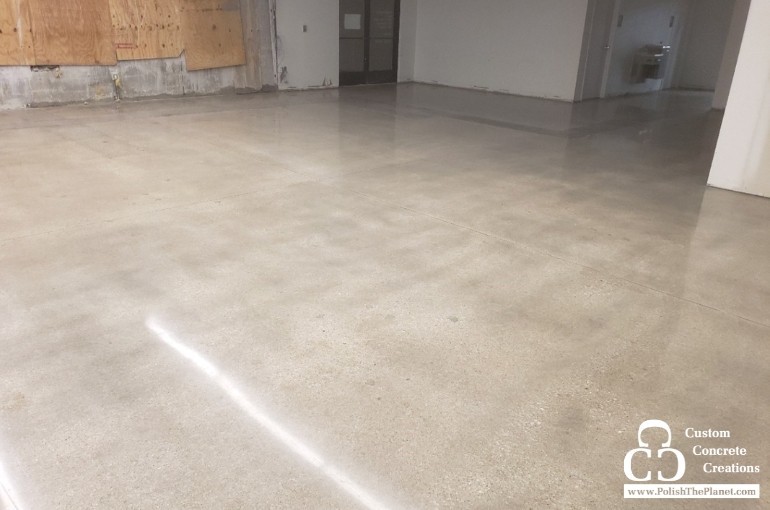
This floor is a strong example. Clean, consistent, and built for long-term use. There are no layers sitting on top that can separate or fail. Instead, the surface itself is refined and strengthened to handle real-world conditions.
That difference matters. You are not installing a temporary solution. You are improving the concrete that already exists.
The Process Behind the Finish
A polished concrete floor is only as good as the process behind it.
1. Surface Preparation
Everything starts with grinding. This removes imperfections and opens the surface. Proper prep is what ensures the rest of the system performs.
2. Progressive Polishing
The floor is polished using multiple passes with finer grits. This builds the smooth, reflective finish while increasing surface strength.
3. Densification
A densifier is applied to harden the concrete from within. Unlike coatings, this reacts inside the slab, making it more resistant to wear and impact.
4. Sealing
The final step protects against moisture, stains, and daily use. It also keeps maintenance simple and predictable.
Each step has a purpose. Skip one, and the floor will not perform the way it should.
Built for Real-World Use
Commercial spaces need flooring that can keep up.
Polished concrete is designed for:
High foot traffic
Equipment and machinery
Long operating hours
Minimal downtime requirements
There is no need for constant refinishing or specialized upkeep. Regular cleaning is enough to maintain the look and performance.
That reliability is what makes it a smart long-term investment.
Lower Maintenance, Fewer Disruptions
One of the biggest advantages is reduced maintenance.
Floors that require frequent repairs or recoating create interruptions. Those interruptions cost time and money. Polished concrete removes much of that risk by offering a stable, long-lasting surface.
You get a floor that stays consistent without ongoing work.
A Smarter Flooring Solution
At the end of the day, this is not about making concrete look better. It is about making it work better.
Polished concrete delivers:
Long-term durability
Lower maintenance costs
Consistent performance
Clean, professional appearance
If your current floor is becoming a problem, it may be time to switch to a system designed to last.